Reading the river: how to witness a Great Migration crossing
Nobody can promise you a crossing. That is the first thing we tell every guest who comes to the northern Serengeti in the dry season, and it is the most important. The wildebeest do not consult the itinerary. What we can promise is position, patience and a guide who has spent years learning to read the river — and when those three things come together, you will witness the wildest hour in Africa.
The herds gather on the southern bank in their thousands, pressing forward, pulling back, testing the water's edge. A crossing can build for four hours and dissolve in a minute because a zebra flinched. Then, with no warning at all, one animal commits — and the plain behind it empties into the river like a dam breaking.
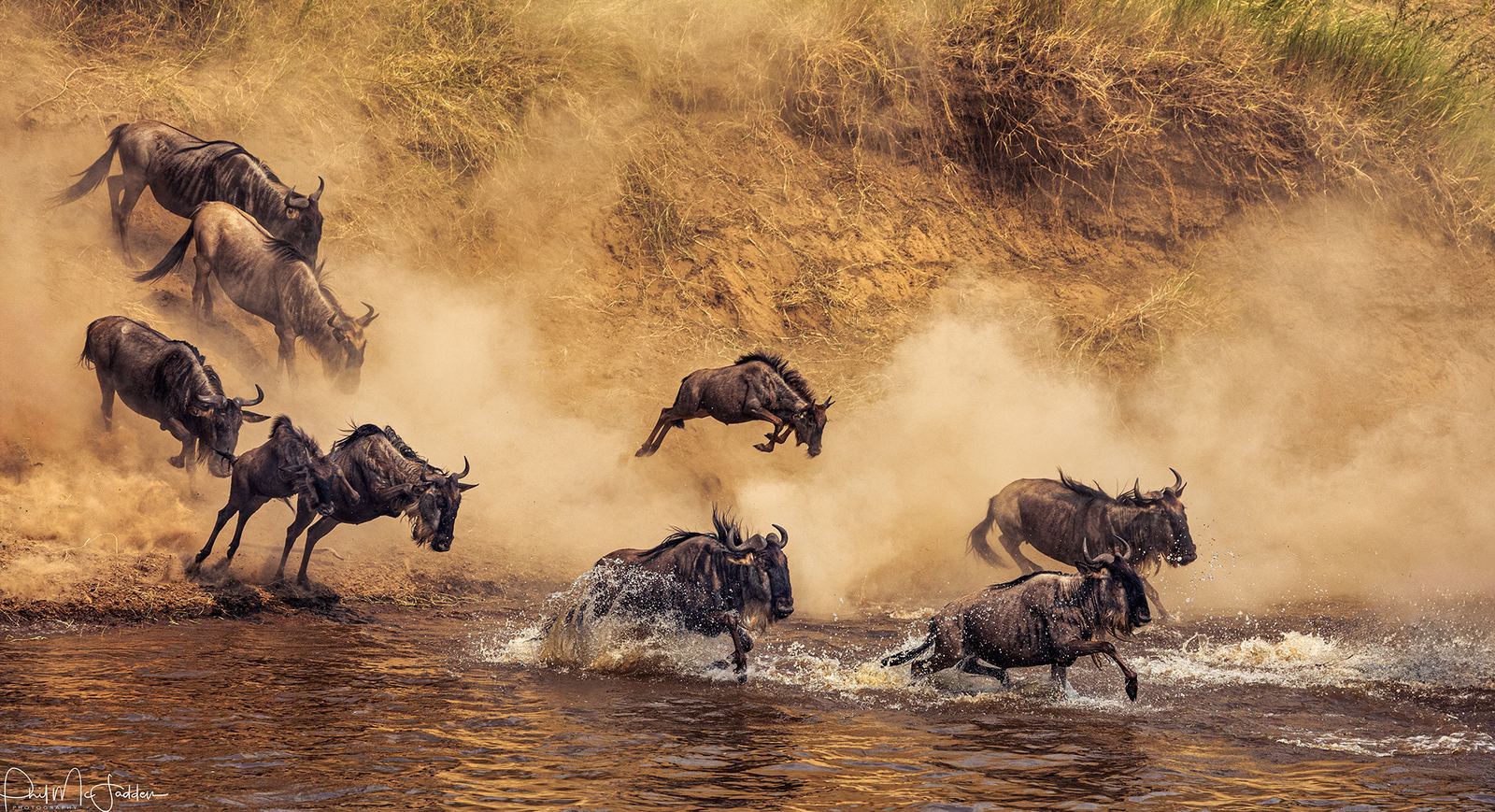
What the guides are watching
From the vehicle it looks like chaos. It is not. Our guides are reading a dozen signals at once: the size of the gathering, the angle of the sun, which crossing point the herds have favoured that week, where the current runs slow enough for calves, and — always — where the crocodiles are lying. The great Nile crocodiles of the Mara know the crossing points better than anyone, and they have been waiting all year.
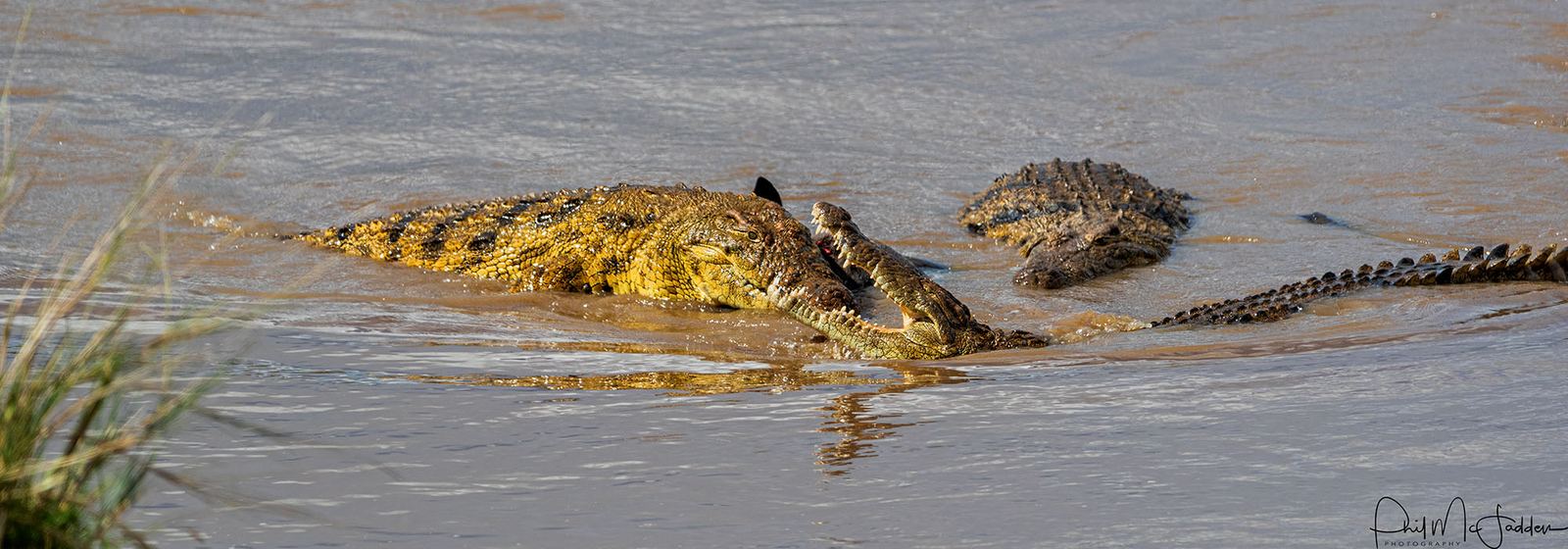
This is why position matters more than luck. Arriving at a river already boiling with animals means you were in the right place an hour before it began. That hour of stillness — engine off, voices low, coffee going cold — is part of the experience. When the crossing finally breaks, the sound arrives before anything else: a drumming of hooves you feel in your chest.
When to come
The herds are typically at the Mara River from July to October, with August the most reliable month. We keep our guests at camps minutes from the main crossing points, not hours — because the difference between watching a crossing and hearing about one at dinner is usually thirty minutes of driving.
Stand on the riverbank yourself
Our Grand African Safari and private northern Serengeti expeditions are timed and positioned for the crossings.
See the expeditions